✨ New Arrivals Just Dropped!Explore
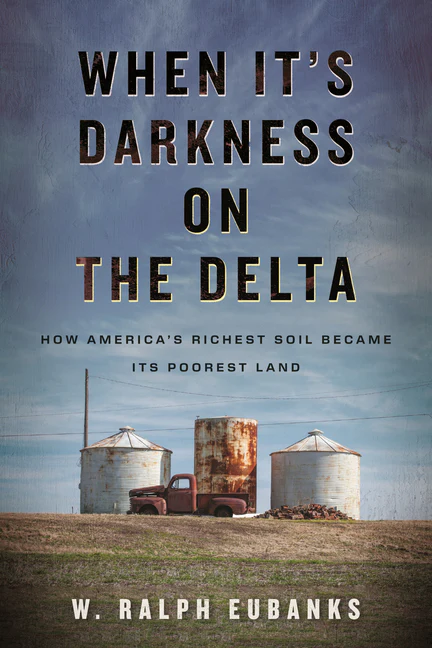
When It's Darkness on the Delta: How America's Richest Soil Became Its Poorest Land
For readers of The Sum of Us and South to America, an essential new look at the roots of American inequality--and the seeds of its transformation Once the powerhouse of a fledgling country's economy, the Mississippi Delta has been consigned to a narrative of destitution. It is often faulted for the sins of the South, portrayed as a regional backwater that willfully cleaved itself from the modern world. But buried beneath the weight of good ol' boy politics and white-washed histories lies the Delta's true story. Mississippi native and award-winning writer W. Ralph Eubanks unearths the region's buried history, revealing a microcosm of economic oppression in the US. He traverses the Delta, examining its bellwether efforts to combat income inequality through vivid portraits of key figures like
Eubanks delivers a powerful and insightful examination of how racism and economic instability have shaped life in the Mississippi Delta. He traces the enduring consequences of political decisions that have entrenched inequality across generations. At the same time, he brings attention to the resilience of local communities and the grassroots movements working toward meaningful change. The book offers a thoughtful framework for policy reform and community investment, underscoring the need to support those who have long sustained the region through their labor and lived experience.
- Theodore G. Bilbo and William Whittington, segregationist congressmen who sabotaged federal reparations for former sharecroppers in the 1940s and '50s
- Gloria Carter Dickerson, founder of the Emmett Till Academy, whose parents were instrumental in desegregating schools in Drew, MS, where Till was murdered
- Calvin Head, a community organizer who runs a farming co-op in Mileston, who revived the legacy of his hometown, the only Black resettlement community in Mississippi
Eubanks delivers a powerful and insightful examination of how racism and economic instability have shaped life in the Mississippi Delta. He traces the enduring consequences of political decisions that have entrenched inequality across generations. At the same time, he brings attention to the resilience of local communities and the grassroots movements working toward meaningful change. The book offers a thoughtful framework for policy reform and community investment, underscoring the need to support those who have long sustained the region through their labor and lived experience.
$10.50
Original: $30.00
-65%When It's Darkness on the Delta: How America's Richest Soil Became Its Poorest Land—
$30.00
$10.50Product Information
Product Information
Shipping & Returns
Shipping & Returns
Description
For readers of The Sum of Us and South to America, an essential new look at the roots of American inequality--and the seeds of its transformation Once the powerhouse of a fledgling country's economy, the Mississippi Delta has been consigned to a narrative of destitution. It is often faulted for the sins of the South, portrayed as a regional backwater that willfully cleaved itself from the modern world. But buried beneath the weight of good ol' boy politics and white-washed histories lies the Delta's true story. Mississippi native and award-winning writer W. Ralph Eubanks unearths the region's buried history, revealing a microcosm of economic oppression in the US. He traverses the Delta, examining its bellwether efforts to combat income inequality through vivid portraits of key figures like
Eubanks delivers a powerful and insightful examination of how racism and economic instability have shaped life in the Mississippi Delta. He traces the enduring consequences of political decisions that have entrenched inequality across generations. At the same time, he brings attention to the resilience of local communities and the grassroots movements working toward meaningful change. The book offers a thoughtful framework for policy reform and community investment, underscoring the need to support those who have long sustained the region through their labor and lived experience.
- Theodore G. Bilbo and William Whittington, segregationist congressmen who sabotaged federal reparations for former sharecroppers in the 1940s and '50s
- Gloria Carter Dickerson, founder of the Emmett Till Academy, whose parents were instrumental in desegregating schools in Drew, MS, where Till was murdered
- Calvin Head, a community organizer who runs a farming co-op in Mileston, who revived the legacy of his hometown, the only Black resettlement community in Mississippi
Eubanks delivers a powerful and insightful examination of how racism and economic instability have shaped life in the Mississippi Delta. He traces the enduring consequences of political decisions that have entrenched inequality across generations. At the same time, he brings attention to the resilience of local communities and the grassroots movements working toward meaningful change. The book offers a thoughtful framework for policy reform and community investment, underscoring the need to support those who have long sustained the region through their labor and lived experience.